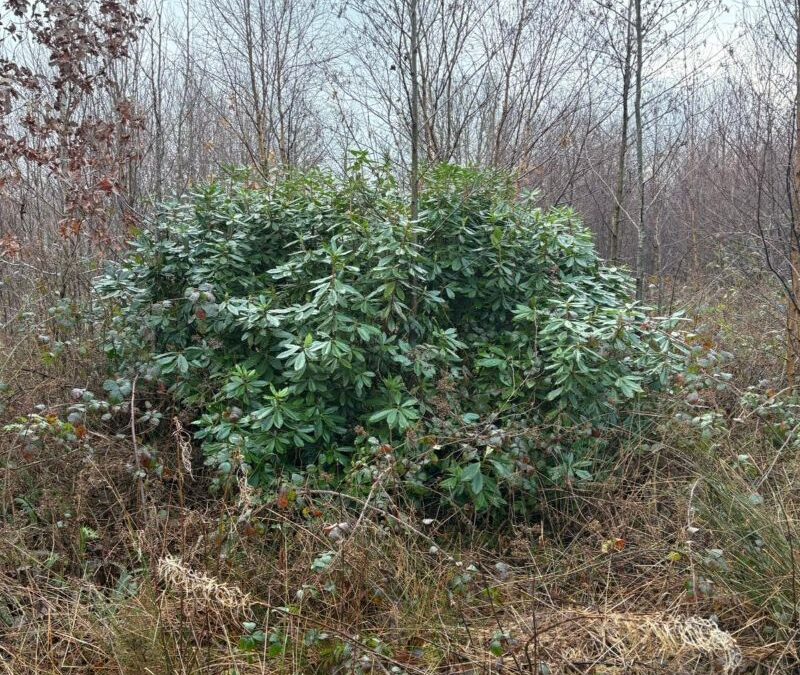
This week our Biodiversity and Engagement Officer has been removing some of the rhododendron in Longwood, and visitors often ask why this work is necessary. Although rhododendron has attractive flowers and evergreen leaves, it is a serious problem in British woodlands.
What Is Rhododendron ponticum?
Rhododendron ponticum was introduced to Britain in the 18th century as a garden plant. Since then, it has spread widely and is now classed as an invasive species. In many British woodlands, rhododendron grows quickly and outcompetes native plants.
Why Is Rhododendron Harmful to British Woodlands?
Rhododendron forms a dense canopy that blocks sunlight from reaching the woodland floor. As a result, native woodland plants such as bluebells, primroses and wood anemones cannot grow. When these plants disappear, insects, birds and mammals also lose vital food and shelter.
Rhododendron also changes the soil. Its leaves break down slowly and increase soil acidity. This makes it harder for native species to return, even after rhododendron has been removed. In heavily affected areas, woodlands can become dominated by rhododendron, reducing biodiversity.
Rhododendron and Plant Disease
Rhododendron can carry Phytophthora ramorum, often known as “sudden oak death”. While the plant may show few symptoms, it can spread the disease to native trees such as oak, beech and larch. This creates an additional risk to woodland health.
How Is Rhododendron Removed?
Removing rhododendron from woodland takes time and ongoing management. Mature plants are cut back and treated to prevent regrowth. These areas are then monitored over several years.
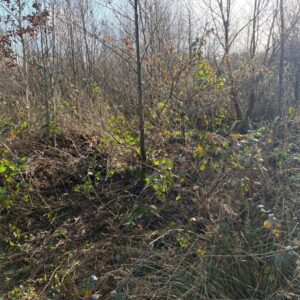
Once rhododendron is removed, more light reaches the woodland floor. This allows native plants to return and creates better conditions for insects, birds and other wildlife.
Restoring Biodiversity in Longwood
The hope is that now these areas have been cleared, native species will be able to reclaim the space, with woodland flowers gradually returning and wildlife once again finding food and shelter. Over time, this will help restore the natural balance of the ecosystem and make the woodland more resilient to future pressures such as climate change.
Although it can be surprising to see rhododendron being removed, this work is essential for protecting biodiversity in Longwood. Careful woodland management helps ensure the site remains healthy for future generations.
To learn more about our woodland management work or to get involved through volunteering, please follow our website and social media channels.